Watch Time Fly
Time runs differently at high speeds because special relativity links time to motion: a moving clock ticks more slowly relative to a stationary observer. The effect is called time dilation, and it becomes noticeable only when speeds are a large fraction of the speed of light, c ≈ 299,792,458 m/s. For a concrete scale, the Lorentz factor γ equals 1/√(1−v²/c²), and at v = 0.9c, γ ≈ 2.29, meaning the moving clock runs about 2.29 times slower than the stationary one.
In everyday life, the effect is tiny because typical speeds are far below c. At 100 m/s (about 360 km/h), v/c ≈ 3.34×10⁻⁷, so γ differs from 1 by roughly (1/2)(v/c)² ≈ 5.6×10⁻¹⁴. That translates to a fractional slowdown of about 5.6×10⁻¹⁴ per second, which is far smaller than the drift and noise in ordinary clocks.
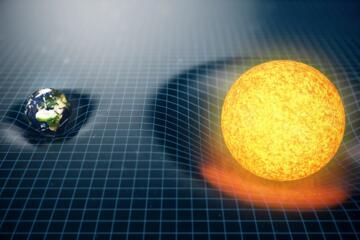
Relativity also predicts that moving clocks behave differently depending on the observer’s frame, which is why the effect is not “time travel” but a measurable change in how simultaneity and elapsed time are defined. A practical example appears in navigation: GPS satellites orbit Earth at about 3.9 km/s, and relativity corrections of both special-relativistic and general-relativistic origin are applied to keep positioning accurate. The special-relativistic contribution is on the order of a few microseconds per day; without corrections, errors would grow quickly enough to degrade service.
As an aside from the engineering side, GPS receivers often use the WGS 84 reference frame and apply relativistic corrections in software; I’ve seen people treat those corrections as “magic constants,” when they are derived from the same physics that predicts time dilation.
Main Problems And Pain Points
People often mix up three different ideas: time dilation from relative motion, gravitational time dilation from differences in height or gravitational potential, and the psychological sense that time “feels” different. The physics effect concerns clock rates and measured intervals, not subjective perception, and the distinction matters because the mechanisms differ.
A common misunderstanding is to assume that time dilation means “the faster you go, the more you personally age slower,” without specifying the reference frame. Special relativity treats motion symmetrically: each observer can describe the other as moving, and each can compute the other’s clock rate using the same rules. The measurable outcome is about comparisons between clocks after accounting for the geometry of spacetime, not about a single universal “true time” that one person owns.
Another pain point is expecting the effect to show up at car speeds. Even at 300 km/h (≈83.3 m/s), the fractional difference in clock rate is around (1/2)(v/c)² ≈ 3.9×10⁻¹⁵ per second, which is far below what typical consumer timing hardware can resolve. If someone claims they observed time dilation during a drive, the claim conflicts with the expected magnitude unless the measurement setup is extraordinarily sensitive and controlled.
Biological mechanisms do not drive this effect. Human physiology does not “sense” special-relativistic time dilation at driving speeds; the body’s internal clocks run according to chemistry and neural signaling, and those processes are not known to amplify a 10⁻¹⁴-level fractional difference into a noticeable change. The only way to see the effect is to compare clocks with known stability and to control for environmental factors like temperature, vibration, and electromagnetic interference.
Supporting technologies matter because the effect is small. High-precision timekeeping uses atomic clocks and careful synchronization, and experiments rely on stable frequency standards, controlled motion, and rigorous data analysis. When people skip those dependencies, they end up measuring drift, not relativity.
Solutions And Advice
Use The Right Speed Scale
Start by comparing your speed to c. If v is less than about 1% of c (v/c < 0.01), time dilation from motion stays below roughly 5×10⁻⁵ in fractional terms, and at car speeds it drops to around 10⁻¹⁴. In practice, this means you should not expect measurable time dilation from typical driving, even with a smartwatch.
What it looks like: a 1-second interval measured by two clocks separated by relative motion at 100 m/s differs by about 5.6×10⁻¹⁴ seconds, which is 0.056 picoseconds. That is far smaller than the resolution of consumer devices and far smaller than the timing uncertainty introduced by GPS reception jitter or phone sensor scheduling.
Relevant method: compute γ = 1/√(1−v²/c²) and then compare elapsed proper time for the moving clock. If you want a quick check, approximate γ ≈ 1 + (1/2)(v/c)² when v ≪ c.
Separate Motion From Gravity
When you read about “time running differently,” separate special-relativistic time dilation (motion) from general-relativistic time dilation (gravity). GPS needs both: satellites experience different gravitational potential than receivers on Earth, and they also move fast enough for special relativity to matter. Mixing them leads to wrong sign conventions and wrong magnitudes.
In practice, you can interpret navigation corrections by asking which effect dominates. For GPS, the gravitational component is larger in magnitude than the special-relativistic component, and both are applied as corrections to the satellite’s broadcast time. A mild frustration here is that many summaries mention only one correction, which makes the total error story confusing.
Relevant tools: reference frames and timing models used in GPS documentation, plus standard relativity derivations. If you are comparing numbers, check whether the source reports per day, per second, or per orbit.
Interpret Clock Comparisons Carefully
Time dilation is about comparing clocks after specifying how the comparison is made. In special relativity, “simultaneous” events depend on the observer’s frame, so you cannot compare times without a consistent synchronization convention. This is where many online explanations become sloppy, because they skip the operational definition of “elapsed time.”
What it looks like in practice: if two clocks start together and later meet again, you can compare their accumulated proper times. If they never meet, you need a protocol for exchanging signals and defining which events correspond to “the same moment.”
Relevant method: use the concept of proper time for each worldline and then relate it to coordinate time in a chosen inertial frame. For calculations, many physicists rely on the Lorentz transformation rather than informal reasoning.
Use Realistic Measurement Expectations
If your goal is to observe relativity effects, you need measurement systems designed for tiny fractional differences. Atomic clocks can reach fractional uncertainties around 10⁻¹⁸ in some configurations, which is why relativity corrections show up in high-precision timing experiments. Consumer clocks do not reach that stability, so the effect remains hidden.
In practice, the “observable” part of relativity at everyday speeds is usually not special-relativistic time dilation itself, but timing artifacts from signal processing, network delays, and sensor scheduling. Those artifacts can be milliseconds, while the expected relativity effect at 100 m/s is about 10⁻¹³ seconds over a second.
Relevant tool: if you want to learn by doing, use publicly documented GPS correction concepts rather than trying to measure time dilation with a phone stopwatch. I once watched a classroom demo fail because the phone’s background timer throttling dominated the results.
Learn From GPS Correction Numbers
GPS provides a practical, evidence-based bridge between theory and measurement. Satellites orbit at about 20,200 km altitude and move at roughly 3.9 km/s, and their onboard clocks are adjusted so that the system delivers accurate positioning on Earth. The relativity corrections are not optional; they are part of the timing model used to interpret signals.
What it looks like: a receiver computes its position by measuring signal travel time, then converts that to a time coordinate consistent with the GPS time scale. If relativity were ignored, the timing model would drift, and position errors would grow.
Relevant method: read the GPS timing model documentation and look for terms tied to velocity (special relativity) and gravitational potential (general relativity). Keep an eye on units; some sources report nanoseconds per day, others report equivalent range errors in meters.
Check Limits And Safety Boundaries
Relativity does not change the physics of safety at road speeds. High-speed driving increases risk through traction limits, braking distance, and driver reaction time, not through any “time distortion” that would protect you. If you are using this topic to inform driving decisions, focus on measurable factors like stopping distance and lane discipline.
In practice, the most relevant “time” for driving is the time-to-collision and the time it takes to brake from a given speed under known tire and road conditions. Those are governed by friction and vehicle dynamics, not by relativistic clock rates.
Relevant tools: vehicle braking distance calculations, tire friction estimates, and driver-assistance system documentation. Relativity can explain why GPS needs corrections, but it does not justify pushing speed limits.
Case Examples
Example 1: The Stopwatch Claim
An enthusiast rides in a high-speed train and compares a phone stopwatch to a friend’s stopwatch, expecting a “relativity difference” after 1 hour. The expected special-relativistic time dilation at about 300 km/h is around 10⁻¹⁴ per second, so over 3600 seconds the difference is roughly 3.6×10⁻¹¹ seconds, far below phone timing resolution and dominated by scheduling delays.
The correct interpretation is that the observed discrepancy, if any, comes from device behavior: timer granularity, background throttling, and GPS signal acquisition differences. A careful next step is to treat the experiment as a study of device timing, not a test of relativity.
Example 2: GPS Drift Confusion
A reader notices that GPS time and local time differ and assumes relativity “adds minutes” at high speed. The reality is that GPS uses a defined time scale and applies corrections so that the system remains consistent; the relativity terms are tiny per day but accumulate into meaningful positioning errors if omitted.
A realistic educational approach is to compare reported correction magnitudes in microseconds per day and translate them into equivalent range errors. That translation helps readers connect clock-rate differences to navigation performance without turning the topic into a myth about personal time travel.
Comparison Table Or Checklist
| Goal | What To Check | Expected Size At Car Speeds | Best Evidence Path |
|---|---|---|---|
| Understand Time Dilation | Compute γ using v/c and compare proper time vs coordinate time | ~10⁻¹⁴ fractional rate change at ~100 m/s | Use physics references and GPS timing models for real-world validation |
| Test With A Stopwatch | Check timer resolution, background throttling, and synchronization method | Far below phone timing noise | Treat as a device-timing experiment, not a relativity test |
| Connect To Navigation | Separate special vs gravitational terms and verify units | Microseconds per day scale in satellite timing | Use documented GPS correction terms and compare to reported drift |
Common Mistakes
People often claim that time dilation means “time stops” at high speed. Special relativity predicts that time dilation grows as v approaches c, but it never reaches a finite-speed “stop” for massive objects; the limit v → c corresponds to γ → ∞, and massive particles cannot reach c.
Another mistake is using inconsistent units when comparing published numbers. Some sources report time dilation as a fractional rate change, others as a time difference per day, and others as an equivalent distance error for navigation. Mixing these formats leads to incorrect conclusions about whether an effect is “real” or “too small.”
Some explanations ignore that relativity effects depend on the observer’s frame. If you compare two clocks without specifying how events are synchronized, you can produce contradictions that vanish once you use a consistent operational definition.
Finally, readers sometimes conflate “relativity corrections” with “clock hacking.” GPS corrections are derived from physics and applied in the system’s timing model; they are not a user setting and they do not change the fundamental rate of your personal biological processes.
FAQ
Does Time Dilation Happen At Highway Speeds?
Yes in principle, but the magnitude is extremely small. At about 100 m/s, the fractional clock-rate difference from motion is around 10⁻¹⁴ per second, which is far below typical consumer timing uncertainty.
Why Does GPS Need Relativity Corrections?
GPS satellites move at about 3.9 km/s and sit at a different gravitational potential than receivers on Earth. Both special and general relativity shift the satellite clock rate, and the system applies corrections so signal timing maps to accurate positions.
Is Time Dilation The Same As Gravitational Time Dilation?
No. Motion-based time dilation comes from relative velocity in special relativity, while gravitational time dilation comes from differences in gravitational potential in general relativity.
Can Humans Feel Time Dilation During Fast Travel?
There is no known mechanism for the body to amplify the tiny clock-rate differences at ordinary speeds into a noticeable subjective effect. Human perception of time is dominated by attention, arousal, and memory processes rather than relativistic proper-time differences.
What Would It Take To Measure Time Dilation Directly?
You need clocks with extremely high stability and a controlled comparison protocol, typically involving atomic clocks and careful synchronization. The effect at car speeds is far smaller than the noise and drift in most practical timing setups.
Author's Insight
Time dilation becomes understandable once you treat it as a clock-rate comparison tied to spacetime geometry, not as a dramatic “feel” change. The most convincing evidence for readers usually comes from systems like GPS, where microsecond-per-day corrections matter for accuracy. A practical lesson is to translate any claim into units—fractional rate, time difference per day, or equivalent range error—before deciding whether it is plausible. When the numbers land far below measurement noise, the correct conclusion is that the effect exists in theory but is not observable with ordinary tools.
Key Takeaways
- Time dilation from motion follows special relativity and depends on v/c; it becomes large only near the speed of light.
- At typical driving speeds, the expected effect is around 10⁻¹⁴ in fractional clock-rate terms per second, which is too small for consumer measurements.
- GPS accuracy depends on both motion-based and gravity-based relativity corrections, applied in the timing model.
- Clock comparisons require a clear synchronization and reference-frame definition; otherwise, explanations contradict each other.
- Relativity explains navigation timing, while road safety still depends on vehicle dynamics, friction, and human reaction time.