Heat Capacity In Plain Terms
Heat capacity measures how much heat energy a material absorbs for a given temperature rise, and it directly affects how fast temperatures change in real systems. In engineering contexts you often see specific heat capacity (J/kg·K), which normalizes heat capacity by mass so comparisons across materials make sense. A widely cited reference point is water at about 4,186 J/kg·K near room temperature, which means 1 kg of water needs roughly 4.2 kJ to rise by 1 K. By contrast, aluminum is around 900 J/kg·K and steel is often near 450–600 J/kg·K, so the same mass of those metals warms faster than water.
Two evidence-based facts help anchor the concept. First, the SI unit for specific heat is joules per kilogram per kelvin (J/kg·K), and the temperature difference uses kelvin increments even though many people measure in °C. Second, specific heat values vary with temperature and can change across a material’s phase transitions; for example, liquid water and ice have different heat capacities, and the latent heat of fusion dominates during melting. For a practical example, a car’s coolant system uses a liquid with relatively high heat capacity compared with many metals, which helps the engine shed heat without the coolant temperature spiking instantly.
Heat capacity differences come from how energy distributes among microscopic degrees of freedom: atomic vibrations, rotations, and (in some materials) electronic contributions. In solids, most heat goes into lattice vibrations (phonons), and the number of accessible vibrational modes depends on bonding strength, atomic mass, and crystal structure. In liquids and gases, molecular motion adds additional degrees of freedom, which often increases effective heat capacity compared with many solids.
What People Get Wrong
A common mistake is treating “heat capacity” as a single fixed property that never changes. In practice, specific heat can shift with temperature, composition, and microstructure, and published tables usually specify a temperature range. Another mistake is comparing materials by thermal conductivity alone; thermal conductivity controls how quickly heat spreads, while heat capacity controls how much energy is required to change temperature. People also mix up heat capacity (J/K for a whole object) with specific heat (J/kg·K), which leads to wrong conclusions when masses differ.
Biological mechanisms matter when heat capacity concepts show up in health-adjacent contexts like skin warming, hot-water exposure, or cooling after exertion. Human tissue is mostly water, and water’s high specific heat helps buffer temperature changes, which is why short exposures can feel less dramatic than you might expect from air temperature alone. Blood perfusion adds a moving heat sink/source: heat capacity sets the local energy storage, while circulation changes where the stored heat goes. When people ignore perfusion, they over-attribute temperature changes to the environment’s temperature and under-attribute them to internal heat redistribution.
Real-world situations reveal the dependencies. A radiator core made of aluminum can heat quickly because aluminum’s specific heat is lower than water, but the system still resists rapid temperature swings because the coolant mass and flow rate dominate the overall thermal inertia. In a home heating scenario, a cast-iron stove may feel “slow to warm” compared with a thin metal sheet because the stove’s total heat capacity (mass times specific heat) is larger, even if both materials have similar thermal conductivity. In both cases, the supporting technology is the same idea: heat transfer depends on both energy storage (heat capacity) and energy transport (convection and conduction).
How Material Structure Changes It
Material structure controls how many microscopic energy states can be excited at a given temperature. In many solids, stronger bonds and stiffer lattices shift vibrational frequencies upward, which can reduce the number of thermally accessible modes at room temperature. Heavier atoms often lower vibrational frequencies, which can increase heat capacity in some temperature ranges, though the relationship depends on the material’s phonon spectrum. Crystal defects and grain boundaries also affect heat capacity slightly by altering vibrational behavior, which is why two “steels” with different heat treatments can show measurable differences.
For liquids, molecular interactions and degrees of freedom matter. Water’s high specific heat reflects how energy goes into changing molecular motion and hydrogen-bond network dynamics; this is why water’s heat capacity is higher than many other common liquids. For gases, heat capacity depends strongly on whether energy goes into translational motion only or also into rotational and vibrational modes; at typical room temperatures, diatomic gases like nitrogen and oxygen have different heat capacities than monatomic gases like helium. These differences show up in practical thermal management because the same heater power produces different temperature rise rates in different fluids.
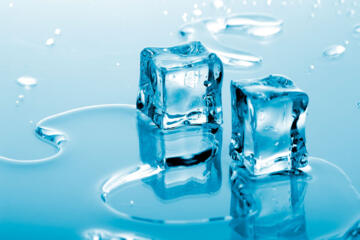
Phase changes create the largest apparent differences. During melting or boiling, temperature can remain nearly constant while energy goes into changing phase, which effectively makes the “heat capacity” look enormous over that interval. That behavior explains why ice-water mixtures can cool more effectively than plain water at the same starting temperature, even though the mixture’s average temperature may not drop linearly with added ice.
Solutions And Advice For Real Comparisons
Use Specific Heat With Units
When comparing materials, use specific heat capacity in J/kg·K and keep the temperature range consistent with the source. If one table lists values at 20 °C and another at 100 °C, the comparison can be misleading because heat capacity often changes with temperature. In practice, you can convert from kJ/kg·K by multiplying by 1,000, and you can treat a 1 K rise as a 1 °C rise for the size of the increment. I often see people mix “per gram” values with “per kilogram” values, which flips results by a factor of 1000—annoying, and it breaks calculations fast.
Separate Heat Capacity From Conductivity
Choose the right property for the job: heat capacity answers “how much energy to change temperature,” while thermal conductivity answers “how quickly heat spreads.” If you’re designing a cooling plate, a high-conductivity metal can move heat to a heat sink quickly, but the plate’s heat capacity still determines how long it buffers temperature spikes. In a car, the coolant’s heat capacity and the coolant mass flow rate set the thermal inertia, while the metal’s conductivity affects how efficiently heat transfers from engine surfaces into the coolant.
Account For Total Thermal Mass
For real objects, total heat capacity equals mass times specific heat, so a small amount of a high-heat-capacity material can still lose to a larger mass of a lower-heat-capacity material. In practice, compare thermal mass using the same geometry and operating conditions rather than comparing material names alone. A quick check: if you double the mass of a metal, the energy needed for a 1 K rise doubles, even if the specific heat stays constant. This is why thick engine blocks or large radiators can feel “stable” in temperature even when their materials have lower specific heat than water.
Watch Temperature Dependence
Use heat capacity values near the operating temperature, not just at room temperature. Many materials show noticeable variation across wide ranges, and phase transitions can dominate behavior over narrow intervals. If you model heating from 20 °C to 80 °C, you need either temperature-dependent data or a conservative average with stated assumptions. A mild frustration: many simplified charts show only one number, and they rarely match the exact temperature window you care about.
Include Heat Transfer Pathways
Heat capacity alone does not predict temperature change rate; heat transfer coefficients and flow conditions matter. In fluids, convection depends on flow regime and properties like viscosity, which can change with temperature. In solids, conduction depends on geometry and contact resistances, which can dominate in assemblies with bolts, coatings, or imperfect contact. For practical evaluation, measure or estimate the heat flux and use the system’s thermal time constant rather than relying on material heat capacity in isolation.
Use Simple Energy Balances Carefully
For educational calculations, you can estimate temperature rise using energy input, mass, and specific heat, but you must include losses and boundary conditions. For example, if a heater delivers 500 W for 60 s, that’s 30 kJ of input energy, but only part may heat the target if heat escapes to the environment. In real systems, radiation and convection losses can be non-trivial, especially at higher temperatures. A practical tool choice is a spreadsheet with explicit assumptions for losses, and a versioned note like “v1.2 assumptions: 10% losses” helps you track what changed.
Case Examples For Everyday Context
Car Cooling Buffering
An anonymized scenario: a driver notices that after a short stop, engine temperature rises faster during city driving than on the highway. The coolant’s specific heat helps buffer temperature changes, but the overall behavior depends on coolant flow rate, fan operation, and how quickly heat transfers from the engine to the coolant. Aluminum components in the engine bay can heat quickly because their specific heat is lower than water, yet the coolant mass and circulation determine how quickly the system reaches a new equilibrium. If the thermostat or fan control changes, the thermal time constant changes even when material properties stay the same.
Home Heating With Different Materials
An anonymized scenario: a homeowner compares a thin steel kettle and a thick cast-iron pot on the same stovetop. The kettle may heat quickly because less mass means less total thermal mass, even though steel’s specific heat is not dramatically higher than other metals. The cast-iron pot can feel slower to warm because it has more mass and thus higher total heat capacity, but it can also hold temperature longer after the burner turns off. The outcome depends on burner power, heat losses to air, and how well the pot bottom contacts the burner surface—contact resistance can matter more than people expect.
Comparison Checklist For Materials
| Material | Typical Specific Heat (J/kg·K) | Common Thermal Role | Practical Implication |
|---|---|---|---|
| Water (liquid) | ~4,186 near 20–25 °C | Coolant, heat transfer fluid | Buffers temperature swings for the same mass |
| Aluminum | ~900 near room temperature | Engine parts, heat spreaders | Heats faster than water for the same mass |
| Steel (typical) | ~450–600 near room temperature | Structural parts, housings | Lower buffering than water; depends on thickness |
| Ice (solid) | ~2,000 near 0 °C | Cooling via phase change | Melting absorbs energy with near-constant temperature |
Checklist for decision support: (1) Confirm the temperature range for the heat capacity values. (2) Compare total thermal mass using mass and specific heat, not just material names. (3) Separate energy storage from heat transport by checking conductivity and convection. (4) Include losses and contact resistance when predicting temperature change rate. (5) Treat phase change intervals as special cases with latent heat dominating behavior.
Common Mistakes That Skew Results
One mistake is using a single “room temperature” heat capacity value for a system that runs at 90–120 °C, where the material’s heat capacity can differ. Another mistake is ignoring that coolant mixtures (water plus glycol) have heat capacities lower than pure water and also change viscosity, which affects convection. People also confuse “feels hot” with “has stored energy,” since skin temperature depends on heat transfer to the surface and blood flow, not just the environment’s heat capacity. In calculations, rounding heat capacity to a whole number can introduce percent-level errors when you multiply by large temperature differences.
Measurement errors also matter. If you estimate heat capacity from temperature measurements, sensor placement and thermal contact can bias results, and the system may not reach thermal equilibrium. A practical aside: I’ve seen lab notes where the thermometer response time was 2–3 seconds, which smears fast transients and makes the material look like it has higher heat capacity than it does. For health-adjacent interpretations, avoid treating a simple energy balance as a direct predictor of tissue injury risk; biological outcomes depend on perfusion, exposure duration, and heat distribution, not only on stored energy.
FAQ
Why Does Water Have High Heat Capacity?
Water’s high specific heat comes from how energy distributes into molecular motion and hydrogen-bond network dynamics, which creates many thermally accessible energy states near room temperature.
Does Heat Capacity Change With Temperature?
Yes. Many materials show temperature-dependent specific heat, and phase transitions can cause dramatic behavior where temperature changes slowly while energy goes into changing state.
How Is Heat Capacity Different From Thermal Conductivity?
Heat capacity sets how much energy is needed for a temperature rise, while thermal conductivity and convection set how quickly heat moves through the material or across surfaces.
What Does “Thermal Mass” Mean In Practice?
Thermal mass refers to an object’s total heat capacity (mass times specific heat), which determines how strongly the object resists temperature change under a given heat input.
Can Heat Capacity Explain Skin Temperature Changes?
It contributes through tissue energy storage, but skin temperature also depends on heat transfer from the environment, blood perfusion, and how heat spreads through tissue layers.
Author's Insight
Heat capacity differences trace back to microscopic energy storage: lattice vibrations in solids, molecular motion in liquids, and additional degrees of freedom in gases. The practical lesson is that “material choice” rarely predicts temperature behavior by itself; geometry, mass, flow rate, and heat losses often dominate the observed temperature curve. When comparing numbers from tables, match the temperature range and units, and treat phase-change intervals as special cases where latent heat dominates. If you model a system, keep assumptions explicit in a short note (for example, “losses assumed 10%”) so you can revise the result when conditions change.
Key Takeaways
- Specific heat capacity (J/kg·K) controls energy storage per unit mass, while thermal conductivity and convection control heat transport speed.
- Water’s high specific heat (~4,186 J/kg·K near room temperature) helps explain why many cooling systems use water-based fluids.
- Heat capacity varies with temperature and can change sharply near phase transitions, where latent heat dominates.
- Total thermal mass (mass × specific heat) often predicts real temperature buffering better than material name alone.
- For health-adjacent interpretations, heat capacity contributes to energy storage, but perfusion and heat distribution strongly influence outcomes.