Crow Multi-Step Thinking
Crows can solve multi-step problems because they combine flexible learning with attention to cause-and-effect, then reuse that knowledge when the environment shifts. In laboratory tasks, “multi-step” usually means the bird must choose an action that changes the next state, not just pick a single correct option. A classic example is retrieving food that requires a sequence such as moving an object, then using the new position to access the reward. Another example is tool use where the bird selects a tool, uses it to obtain a second item, and then uses the second item to reach food.
Researchers also test whether crows can plan by looking for behavior that appears to anticipate later steps. Some experiments measure whether the bird selects the correct tool before it has direct access to the final food, which suggests the crow is tracking a chain of events. In the field, crows sometimes cache food and later retrieve it after delays, which requires remembering where items are and adjusting when caches are disturbed. That memory alone does not prove planning, but it shows the bird can manage information across time.
One practical way to understand the skill is to compare it with “single-step” choice. A single-step task ends when the bird makes one decision, like choosing the right color or pecking the correct spot. Multi-step tasks require the bird to keep track of intermediate outcomes, such as whether a moved barrier actually exposes the next target. When the crow succeeds, it is not just reacting; it is coordinating steps.
What People Get Wrong
Many explanations overreach by treating every clever crow behavior as proof of human-like reasoning. A crow can succeed through simpler mechanisms such as trial-and-error learning, stimulus-response habits, or using strong cues that predict the next step. For instance, if a crow learns that “when I see this arrangement, the food is behind that panel,” the behavior can look planned even when it is cue-driven. Researchers try to separate cue use from planning by changing the setup in ways that break the old association.
Another common mistake is ignoring dependencies. Multi-step performance depends on sensory perception, motor control, and the bird’s motivation to work for food. It also depends on the task design: if the steps are too obvious, the crow may succeed without needing to represent the intermediate state. If the steps are too hidden, the bird may fail even when it has the underlying capability. This is why many studies include control conditions, such as altering one step while keeping others constant.
Supporting technologies and methods matter too. Video tracking helps quantify timing and movement sequences, while automated feeders can standardize reward delivery. In some studies, researchers use touchscreen setups to present controlled sequences, then record which action occurs first and how often the bird backtracks. A side observation from reading methods sections: a lot of papers report version numbers for their analysis software (for example, “Python 3.11” or “R 4.3”) because small changes in tracking thresholds can shift measured success rates.
Claims also get distorted when people mix different task types. Tool use, causal reasoning, and memory for caches all involve multi-stage behavior, but they do not always rely on the same mental representation. A crow that remembers where it hid food might not show the same pattern in a novel multi-step puzzle. Evidence stays stronger when researchers test the same individual across multiple task formats.
How To Evaluate Evidence
Check Task Design And Controls
Start by asking what the crow had to know at each step. In a well-designed multi-step task, the bird must do something that changes the environment so the next step becomes possible. Look for controls that test whether the crow is using a simple cue rather than tracking the chain. For example, if the setup is altered after the first action, a planning account predicts the crow will adjust, while a cue-habit account predicts it will keep following the old pattern.
When reading results, pay attention to sample size and success definition. Many animal studies use small groups, so a few individuals can swing the average. A realistic outcome metric is the proportion of trials meeting the full sequence, not just partial success. If a paper reports “X% completed all steps,” that number matters more than a narrative description of a few good trials.
Separate Learning From Planning
Look for evidence that the crow can handle novelty. Planning claims gain strength when the bird succeeds on new combinations of steps or when the order of intermediate states changes. Researchers often test transfer by training on one arrangement and then testing with a modified arrangement that preserves the causal structure but changes the surface cues. If success drops sharply when cues change but remains when causal structure remains, that pattern supports a representation of the chain.
In some experiments, the bird must choose between tools that produce different intermediate outcomes. A useful practical method for interpreting such tasks is to map the state changes: after step one, what exactly is different? If the crow’s choices align with the predicted state changes, the behavior looks more like reasoning about outcomes than repeating a learned sequence.
Use Realistic Observation, Not Myths
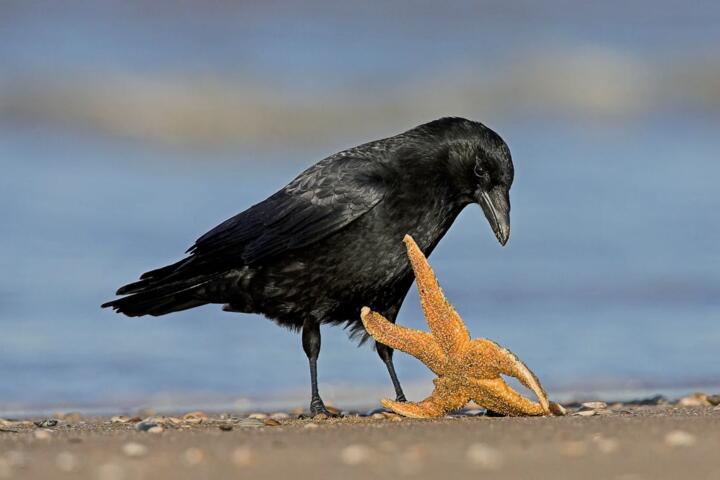
For non-lab observation, focus on sequences that require an intermediate outcome. Crows sometimes drop hard-shelled food onto roads to crack it, then retrieve the pieces; that can look like a multi-step plan, but it also involves learned timing and risk management. Another example is tool selection: a crow may test a tool’s reach or size before committing to a retrieval attempt. If you observe the bird switching tools after a failed attempt, that suggests sensitivity to intermediate constraints.
Keep notes on what changed between attempts. A simple log—time, location, what the crow did first, what happened next—helps you avoid turning a single lucky sequence into a general claim. I find it helps to record whether the crow had prior access to the same setup; repeated exposure can create strong habits that mimic planning.
Account For Motivation And Limits
Multi-step success depends on motivation, which in turn depends on hunger state, reward value, and perceived risk. In experiments, researchers often control feeding schedules, but in the field, motivation varies with season and food availability. If a crow stops after step one, the failure might reflect a cost-benefit calculation rather than a cognitive limitation.
Motor constraints also matter. A crow’s beak and feet coordination can limit how precisely it can manipulate objects, especially small or slippery items. If the task requires fine manipulation, performance may reflect physical skill as much as reasoning. When you compare studies, note whether the task uses large, graspable objects or tiny components.
Case Examples From Studies
Scenario 1: Tool-then-Tool Retrieval. In a controlled setting, a crow is trained to obtain food using a tool that can retrieve a second item. The second item then enables access to the final food. During testing, researchers change the appearance of the tools while keeping the causal relationship the same. The crow’s success rate is evaluated as the fraction of trials where it selects the correct first tool, obtains the correct second item, and then completes the final retrieval.
Scenario 2: Cache Recovery With Disturbance. In an educational field-like setup, a crow caches food in one location, then the cache is partially disturbed later. The crow must locate the remaining food or choose a new retrieval strategy. Researchers compare behavior across conditions where visual cues remain stable versus conditions where cues are altered. The goal is to see whether the crow uses memory of the original cache site or relies on immediate cues to guide retrieval.
In both scenarios, the key evidence is not “cleverness” but whether the crow’s behavior tracks the task’s causal structure across changes. When performance collapses under cue changes that preserve causal structure, the interpretation shifts toward cue-based learning.
Checklist For Interpreting Claims
| What To Look For | Why It Matters | What Counts As Evidence | Red Flags |
|---|---|---|---|
| Full-sequence success | Shows coordination across steps | Reported % of trials completing all steps | Only partial success described |
| Control conditions | Separates cues from chain reasoning | Step changes that break cue links | No comparison groups |
| Novelty or transfer | Tests generalization beyond training | Performance holds when surface cues change | Only trained setups tested |
| Timing and backtracking | Indicates sensitivity to intermediate outcomes | Behavior adjusts after failed intermediate step | Narratives without trial-level data |
Common Mistakes In Crow Stories
One mistake is treating “multi-step behavior” as the same thing as “multi-step reasoning.” A crow can perform a sequence because each step is triggered by immediate cues, not because it represents a future goal. Another mistake is ignoring the training history. If a crow has repeated exposure to similar setups, it may learn a chain of actions that works without needing to understand the causal structure.
People also overinterpret single videos. A short clip can hide the number of failed trials, the time spent searching, and whether the crow tried alternative strategies. If a claim relies on a handful of successful attempts, it lacks the trial-level base rate that helps distinguish skill from luck. I often see posts that omit whether the crow was food-deprived or how rewards were delivered, and those details can shift behavior.
Finally, some explanations borrow human mental labels without testing them. Words like “planning” and “reasoning” can be useful shorthand, but evidence should specify what changed in the task and how the crow responded. When the explanation does not connect behavior to task structure, it becomes storytelling rather than inference.
FAQ
Do Crows Plan Like Humans?
Crows can show behavior consistent with tracking intermediate outcomes, but human-like planning involves additional cognitive capacities that are not assumed from animal tasks. Evidence is stronger when performance adapts to changes that break learned cues while preserving causal structure.
What Counts As A Multi-Step Task?
A multi-step task requires the bird to complete an action sequence where the first action changes the conditions for the next action. Success is usually measured as completing the full chain, not just one correct choice.
Can Crows Solve New Problems?
Some studies test transfer by changing surface cues while keeping the causal relationships. When crows succeed under those changes, it suggests generalization beyond a single memorized setup, though the degree varies by task design.
Why Do Crows Sometimes Fail?
Failures can come from motivation, physical constraints, or task ambiguity. A crow may also rely on cues that are removed or altered, so the task can fail even when the bird has partial knowledge.
How Should I Observe Crows Without Misleading Myself?
Record sequences with context: what the crow did first, what changed afterward, and whether it tried alternatives after a failure. Avoid concluding “planning” from one successful clip without considering the number of attempts and the presence of strong cues.
Author's Insight
Multi-step problem solving in crows is best understood as a combination of learning, attention to causal structure, and memory for relevant states. Evidence becomes persuasive when studies report full-sequence success, include controls that disrupt cue-based strategies, and test transfer to modified setups. Observations in the field can be informative, but they rarely provide the controlled comparisons needed to separate planning from cue-driven habits. When you read a claim, focus on what changed in the task and how the crow’s behavior shifted trial by trial.
Key Takeaways
- Crows can coordinate sequences of actions when the task requires intermediate outcomes, not just a single correct choice.
- Strong evidence comes from controls, trial-level success rates, and tests that change surface cues while preserving causal structure.
- Failures can reflect motivation, motor limits, or cue dependence rather than a lack of reasoning.
- For observation, track what changed after each step and how the crow responds to failed attempts, since that pattern carries more information than a single success.